

Understanding Sporty Bet Predictions for Nigerian Bettors
Explore how Sporty Bet predictions help Nigerian bettors improve wins 💰. Learn types, reliability tips, tech role, and smart strategies to boost your ₦ winnings!
Edited By
Ifeoma Nwogu
Artificial intelligence (AI) is changing the way we predict football scores, especially in Nigeria where the betting scene is rapidly growing. Instead of guessing outcomes, AI uses data and algorithms to forecast the exact scoreline of matches.
These predictions come from analysing huge sets of information — player form, injury reports, head-to-head records, weather conditions, and sometimes referee tendencies. For example, AI models processing Nigerian Professional Football League (NPFL) stats alongside global leagues can spot patterns that human bettors often miss.

The technology usually leans on machine learning, where the system trains itself on past match results, adjusting its forecasts as new data comes in. This means with every game played, the AI gets sharper, improving its accuracy over time.
Besides the tech side, AI score predictions impact local betting platforms like Bet9ja, NairaBet, and SportyBet. These companies integrate AI predictions to offer smarter odds and personalised tips, attracting more users. Nigerian fintech platforms supporting payments and data analytics also play a role, ensuring smooth transactions and real-time score updates.
The main advantage of AI-based score prediction is its ability to process and interpret vast amounts of data quickly, giving bettors a well-informed edge instead of relying on pure luck.
While AI is promising, predicting an exact score remains tough due to the sport’s unpredictability. Factors like sudden red cards, pitch quality, or even crowd behaviour in stadiums can sway results unexpectedly. Still, with growing data availability and improving algorithms, AI’s role in football betting keeps expanding.
In summary, AI-based correct score prediction blends technology and sport analytics to offer Nigerian bettors sharper insights. Understanding how this works helps you appreciate its potential and limitations as you engage with betting markets or sports apps.
Artificial Intelligence (AI) has become a vital tool in predicting exact football scores, affecting betting markets, broadcasters, and fans alike. Understanding how AI works in this context helps bettors and analysts make smarter decisions rather than relying solely on instinct or guesswork. AI’s ability to process vast datasets, identify patterns, and predict outcomes with growing accuracy gives it an edge in a sport where uncertainty is the norm.
Correct score prediction involves forecasting the exact final result of a football match, such as 2-1, 0-0, or 3-2. AI models analyse historic match data, player performance, and many match variables to estimate the likeliest scores. Unlike simple win-draw-loss predictions, correct score forecasting demands precise probability assessments, making it particularly valuable for betting platforms offering specific fixed odds on scorelines.
Machine learning models form the backbone of AI score prediction. These algorithms learn from historic data, identifying relationships between factors like team form, goals scored, and home advantage. For instance, decision trees might separate matches where the home team wins by two goals versus close draws. Models such as logistic regression and random forests can classify and predict the distribution of possible scores.
In practical terms, machine learning helps refine the odds offered by Nigerian betting platforms like Bet9ja or NairaBet. These models continuously update as new matches conclude, improving predictions with every new data point.
Data mining involves extracting valuable insights from large football datasets stored by leagues and betting companies. This process includes filtering, cleaning, and selecting relevant variables like shots on target, possession rates, injuries, or referee tendencies.
Through data mining, unlikely patterns emerge—such as a team consistently conceding late goals or performing better under certain weather conditions. Betting firms often deploy these insights to adjust odds dynamically, helping users of mobile betting apps like OPay or SportyBet make informed stakes.
Neural networks, particularly deep learning, mimic human brain function to process complex, non-linear relationships in match data. These models excel at identifying subtle interactions, like how a key player’s absence might impact attacking efficiency or how tactical styles shape goal probabilities.
Deep learning can handle unstructured data such as video feeds or text reports from local sports analysts, enriching the prediction process. Nigerian startups increasingly explore these technologies to enhance AI tools, aiming to deliver real-time, accurate score forecasts that benefit fans, bettors, and broadcasters.
Getting a grip on these AI technologies means you’re not just guessing; you’re using powerful tools that combine numbers, past evidence, and subtle trends to make educated calls on football matches.
This understanding forms the basis for leveraging AI to improve results in football betting and analysis, particularly in Nigeria’s growing sports tech ecosystem.
Accurate football score prediction hinges on the quality and variety of data sources. When AI models ingest detailed, relevant variables, they offer deeper insights and sharper forecasts. For bettors or app developers, understanding these data types helps differentiate between guesswork and research-backed predictions.

Historical data forms the backbone of AI-driven football predictions. This includes previous match results, goals scored, conceded records, and even finer details like corner kicks or possession rates. For instance, analysing a Nigerian Professional Football League team’s past home and away performances against similar opponents can expose patterns that influence score predictions.
More sophisticated systems also bring in time-series data to catch trends, such as how a team’s performance varies across seasons. Such data guides AI to account for momentum shifts rather than treating every game as isolated.
Individual player condition impacts scoring chances heavily. AI systems use recent player statistics—goals, assists, passes completed, etc.—to gauge form. Injuries or suspensions are also vital variables. Imagine a forward from Enyimba FC who hasn’t scored for four games; this slump is factored into predictions.
Team dynamics go beyond numbers: coaching tactics, team chemistry, and lineup changes alter outcomes. Some Nigerian teams struggle when key players are missing or if there’s instability from frequent transfers, all of which powerful AI models seek to capture by assimilating up-to-date squad information.
Playing at home remains an influential factor, particularly in crowds-heavy Nigerian stadiums like the National Stadium in Lagos or Aba’s Enyimba ground. Home teams often exhibit better performance due to familiar pitch conditions, crowd encouragement, and less travel fatigue. AI models weigh this advantage heavily, adjusting predicted scores upwards for the home side.
The weather can swing football games in unexpected ways. Nigeria’s rainy season, for example, often leads to heavy pitches that slow down play and reduce scoring opportunities. In contrast, dry, hot conditions favour faster gameplay. AI systems integrate local weather forecasts to anticipate how rain or heat might affect match pace and final scores.
Refereeing remains an unpredictable element yet alters outcomes decisively. Decisions on penalties, red cards, or added injury time can shift the scoreline sharply. Some AI models include stats on referee tendencies, such as how likely a referee is to award penalties or issue cards in certain scenarios. In leagues like the NPFL where officiating standards vary, understanding these nuances helps refine predictions.
For anyone involved in betting or analysis, factoring these external variables separates informed predictions from mere guesses. AI’s capacity to handle vast, multifaceted data improves confidence in correct score forecasts.
By blending match stats, player form, and external influences, AI score prediction models provide a richer, more realistic picture of football outcomes than traditional methods. For Nigerian markets and platforms, this means smarter decision-making and more engaging user experiences.
AI-driven correct score prediction in football faces several obstacles that shape its effectiveness and practical use. Understanding these challenges helps users—especially bettors, app reviewers, and compliance officers—gauge what to expect and how to interpret predictions with caution.
Football remains a highly unpredictable sport. Unexpected events like sudden red cards, last-minute penalties, or poor pitch conditions can change the entire course of a match instantly. Such occurrences rarely fit neatly into data patterns AI models rely on. For example, an underdog Nigerian Premier League team might suddenly snatch a victory due to an inspired substitute, a scenario that historical data or player form metrics seldom predict. This randomness limits AI prediction accuracy, reminding users that AI outputs are probabilities, not certainties.
Good predictions depend heavily on reliable data, but access to consistent and accurate football data, especially in local leagues across Nigeria and Africa, is far from guaranteed. Missing or outdated information on player injuries, recent transfers, or tactical shifts can skew models severely. Consider lower-tier clubs where detailed match stats—such as pass completion rates or heat maps—are rarely compiled or openly available. Even top betting platforms can struggle when local data sources are patchy, leading to confidence levels in AI predictions that might not match actual game realities.
AI models can fall into traps like bias and overfitting. Bias happens when the training data is weighted too heavily towards certain teams, leagues, or playing styles, causing the AI to favour those circumstances and misread others. Overfitting occurs when a model learns the noise in historical data too well, mistaking it for signal, thereby performing poorly on new matches. For instance, if a model focuses mostly on the English Premier League’s style, it might exaggerate similar patterns when predicting Nigerian league games, leading to inaccurate forecasts. Mitigating these risks demands careful model validation and diverse, representative training datasets.
While AI provides a powerful tool for football score prediction, recognising these challenges keeps expectations realistic and helps users make better use of the insights generated.
In sum, the uncertain events inherent in football, the patchy quality of available data, and potential model biases place clear limits on AI score predictions. These factors underscore the need for combining AI tools with human judgement, especially in high-stakes contexts such as betting or compliance review within Nigeria’s thriving sports market.
AI-driven correct score predictions have found real practical use in Nigeria, especially given the country's growing interest in football betting and the huge fan base for local and international games. These predictions are not just tech novelties but tools that enhance decision-making for bettors, broadcasters, and fans alike. Their relevance is further magnified by Nigeria's vibrant digital ecosystem and mobile connectivity.
Nigeria’s betting market has witnessed exponential growth, with naira-denominated sports betting platforms like Bet9ja, NairaBET, and Merrybet leading the surge. These operators increasingly use AI correct score predictions to improve the user experience and odds-setting precision. Predictive analytics help pinpoint probable scorelines based on vast historical data and current team form, giving bettors smarter insights.
By integrating AI models, these platforms offer tailored betting options and personalised tips, enabling users to make more informed wagers. This is particularly useful for punters who focus on exact score bets — a difficult wager without data-powered insights. As a result, naira betting websites have become more reliable, competitive, and attractive to both casual punters and seasoned bettors.
Mobile has become the dominant platform for sports betting in Nigeria, thanks to widespread smartphone use and affordable data plans. Leading apps like Betking, SportyBet, and AccessBet now incorporate AI score prediction tools directly within their interfaces. This real-time access allows users to get prompt, data-driven predictions just before placing bets, reducing guesswork.
AI-powered notifications and in-app suggestions tailored to ongoing matches provide a seamless betting experience. Such integrations also support features like live betting and quick cash-outs based on predicted outcomes. This enhances transparency and trust, driving user retention and engagement on mobile betting platforms.
Broadcasters and sports analysts in Nigeria increasingly rely on AI-based score predictions to enrich football commentary and post-match discussions. Channels like SuperSport and NTA use AI tools to present more nuanced pre-match forecasts, aligning with statistical likelihoods.
These predictions lend depth to analysis, allowing experts to back their perspectives with data rather than just intuition. For example, during the Nigeria Professional Football League (NPFL), AI models help highlight likely scorelines that consider player injuries, weather, and home advantage. This adds qualitative value and keeps viewers captivated with fresh insights.
Fans today want more than just watching matches; they crave interactive and engaging football content. AI-based correct score predictions boost this experience by enabling fans to participate in prediction games, fantasy leagues, and social betting communities.
Through platforms like WhistleSports Nigeria or Pulse.ng’s sports sections, fans can compare their guesses with AI-generated forecasts, sparking lively discussions and competitions. This turns football watching into a more communal and thrilling affair, encouraging more consistent participation.
AI correct score predictions are reshaping how Nigerian bettors, analysts, and fans engage with football, making the sport's experience richer and more data-informed than ever before.
The future of AI-driven football score predictions is shaped by continuous innovation and growing datasets. As these technologies advance, their accuracy and relevance in betting, analytics, and fan engagement will improve significantly. Understanding these trends helps stakeholders—from bettors to tech developers—prepare for shifting dynamics and harness AI predictions effectively.
Accuracy in score prediction relies heavily on quality and variety of data. Future developments will see AI systems integrating unconventional data sources such as live GPS tracking of players, biometric sensor data, and social media sentiment analysis. For example, Nigerian betting platforms might soon use real-time physical data from players—like heart rate and distance covered—to refine predictions during matches. Combining these with existing match stats enables models to adjust dynamically as a game unfolds, giving bettors more precise information.
Moreover, incorporating historical injury records and psychological factors could fine-tune models further. Advanced integration means AI could consider not just the game but personal and team dynamics, leading to responses that genuinely reflect match realities. This level of detail has started gaining traction in European leagues and will likely trickle into Nigerian football coverage through partnerships with local tech startups.
Nigerian tech entrepreneurs are rapidly entering the AI sports prediction space, blending local insights with global expertise. Startups like CafBet and SportyBet leverage AI not only for score prediction but also to tailor betting markets suited to Nigerian bettors' preferences and risk appetite. These companies often combine AI with mobile technology to reach millions of smartphone users across the country.
Innovation isn't limited to firms alone. Hackathons and university research centres in Lagos and Abuja increasingly focus on sports analytics, offering fresh ideas and talent pipelines. Local developers experiment with machine learning models that accommodate Nigeria's unique football ecosystem—including data sparsity and fluctuating player availability due to transfers or league interruptions. Such grassroots innovation improves AI’s adaptability and broadens its impact beyond traditional markets.
As AI’s footprint grows in predicting exact scores, ethical concerns and regulation become crucial issues. Betting regulators in Nigeria, such as the National Lottery Regulatory Commission (NLRC), face challenges ensuring that AI-driven predictions do not facilitate unfair advantages or manipulation. Transparent algorithms and data privacy safeguards will be demanded to protect bettors.
There’s also the risk of over-reliance on AI predictions introducing problem gambling behaviours. Providers must introduce responsible gaming features and educate users about AI limitations. Regulatory frameworks might also standardise disclosure requirements about how predictions are generated, especially if AI influences betting odds.
The rise of AI in football score prediction calls for balanced progress—embracing tech advances while safeguarding fairness, privacy, and consumer welfare.
Overall, future trends in AI-powered score prediction promise better insight and richer experiences for Nigerian bettors and fans alike. Still, their success depends on combining technical progress with ethical governance and local innovation.
Explore how Sporty Bet predictions help Nigerian bettors improve wins 💰. Learn types, reliability tips, tech role, and smart strategies to boost your ₦ winnings!

Explore 22Bet’s latest features and payment options for Nigerian users 🇳🇬. Get tips on registering, safe betting, and navigating the platform for your best experience! 🎲
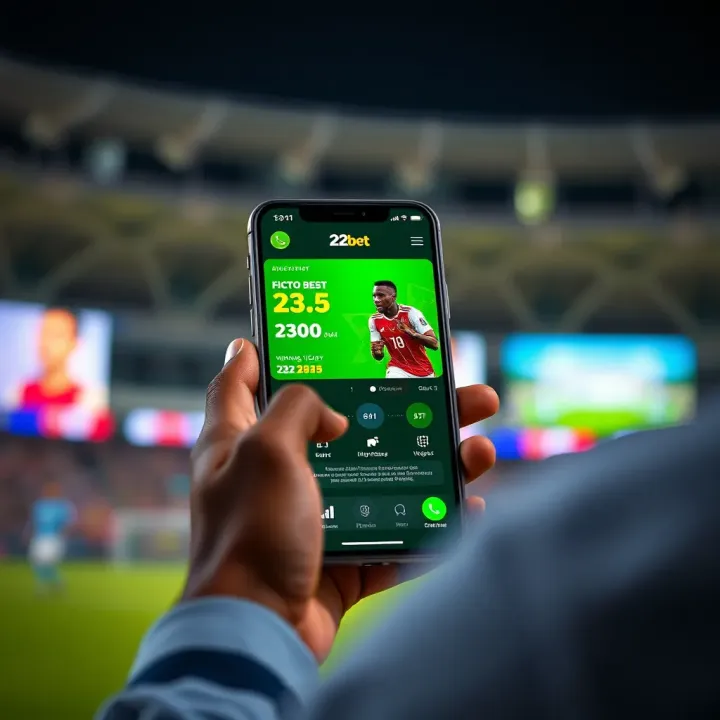
🎫 Learn how Nigerian bettors can spot, verify & claim 22bet winning tickets safely. Avoid common errors, manage your ₦ winnings wisely, & stay secure while betting.

🎮 Discover the best times to play Rocketman on 22Bet for higher wins and smoother sessions. Nigerian players get tips on peak hours, internet, and power challenges ⚡🕒.
Based on 8 reviews